Microplastics in Soil: Understanding the Silent Threat to Agriculture
Learn the impact of microplastics in soil. Discover how synthetic particles degrade agricultural lands, affect crop health, and enter the food chain.
While ocean plastic pollution dominates public attention, a far more insidious ecological crisis is quietly unfolding beneath our feet. Modern agricultural practices and household waste have led to an alarming accumulation of synthetic particles in our farmlands. This hidden contamination threatens agricultural productivity and public health. Fortunately, soil scientists are sounding the alarm. By addressing the accumulation of microplastics in soil, we can protect crucial earthworm populations, secure crop yields, and prevent toxic chemicals from entering our global food supply.
The Sources of Microplastics in Soil
How do microplastics in soil accumulate in such high concentrations? Unlike oceans, where plastics drift from rivers, agricultural soils are contaminated directly. The primary source is the widespread use of agricultural plastic mulch films, which are laid over fields to prevent weed growth and conserve moisture. Over time, these films degrade into microscopic fragments that remain embedded in the ground indefinitely.
Furthermore, the application of wastewater sewage sludge as fertilizer is a major pathway. Municipal wastewater treatment plants filter out millions of microplastic fibers from laundry and household waste. Consequently, when this sludge is applied to agricultural fields, it acts as a massive delivery system for microplastics in soil, polluting clean lands globally.
The Ecological Impact on Crops and Earthworms
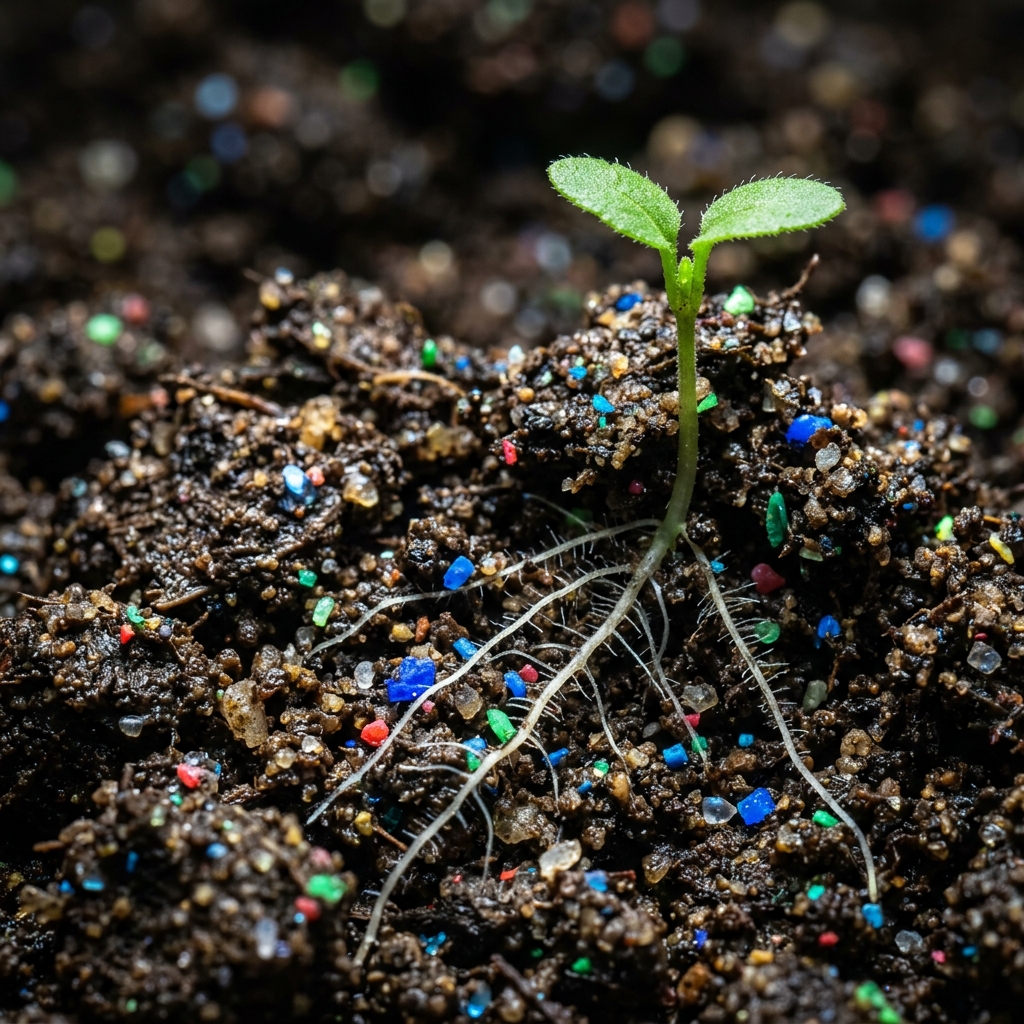
The presence of microplastics in soil severely disrupts the delicate physical and biological systems that support plant life. These tiny particles alter the soil structure, reducing its water-holding capacity and blocking nutrient absorption. Additionally, earthworms—the essential engineers of healthy soil—experience high mortality rates when they ingest microplastic fragments.
- Blocked Root Systems: Tiny plastic particles can clog root pores, stunting crop growth and reducing overall yields by up to 20% in heavily contaminated fields.
- Toxic Chemical Leaching: Microplastics act as magnets for toxic organic pollutants in the environment, transporting these poisons directly into the roots of edible plants.
- Disrupted Soil Microbiome: The synthetic material alters the balance of beneficial soil microbes, making plants more susceptible to diseases.
Solving the Agricultural Plastic Crisis
Reversing this contamination requires a massive shift in agricultural operations. Fortunately, researchers are developing biodegradable alternative films made from natural plant starches that decompose completely without leaving microplastics in soil. According to reports from the United Nations Environment Programme (UNEP), implementing strict regulations on single-use agricultural plastics could prevent millions of tons of synthetic waste from entering farmlands annually.
Additionally, upgrading wastewater filtration systems to capture microscopic fibers before they enter agricultural sludge is crucial. Ultimately, safeguarding our soils from microplastics in soil is an absolute necessity if we hope to secure a safe, sustainable food supply for future generations.
Conclusion and Next Steps
In summary, we can no longer ignore the health of our soils. Tackling the threat of microplastics in soil is a critical component of global climate action and food security. To learn more about soil conservation and sustainable farming, explore our Climate Action archives or check out our guide on ecological farming methods today.